
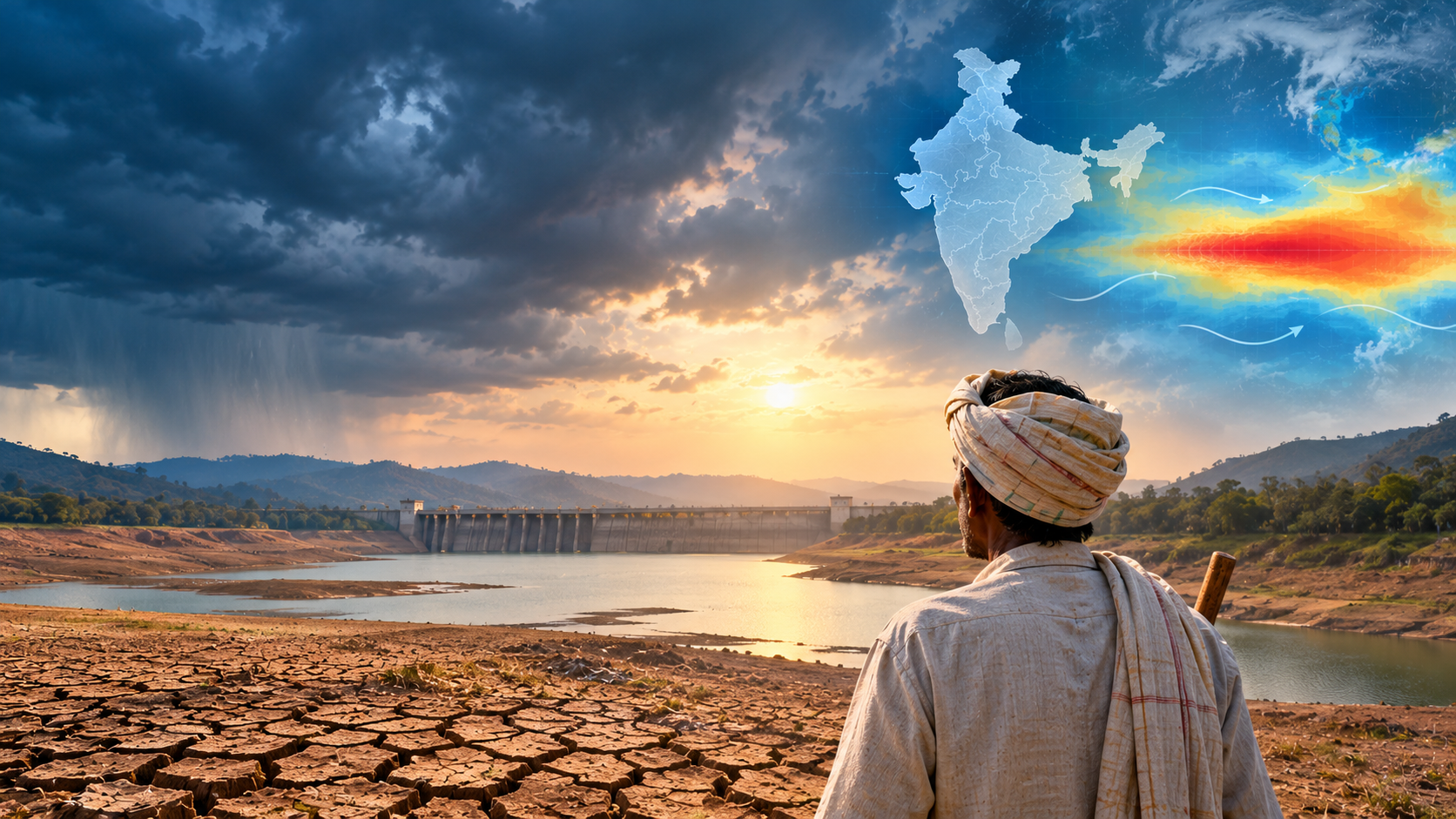
India got 759.4 mm of rain this monsoon against a long-term average of 868.6 mm. That 12.6% deficit makes it the driest monsoon in 11 years, and the fourth driest this century.
Dr M. Rajeevan, Vice Chancellor, Atria University, and former Secretary, Ministry of Earth Sciences, was quoted in DW’s report on the fallout.
The cause: a severe El Nino
Dr Rajeevan points to El Nino as the biggest factor behind the shortfall, and says it deserves serious attention in every monsoon outlook.
The impact
Water: Storage in 178 monitored reservoirs is 132.7 billion cubic meters, below the 10-year average of 151.1
Power: Hydropower output fell nearly 16% in September year on year, and about 40% of coal plants had critically low stocks
Food prices: Onions were 93% costlier in September than a year ago, sugar 28% and rice about 8%
Farmers: Rural incomes face a squeeze as weak harvests meet higher food costs
What’s next
The winter (rabi) crop depends on soil moisture left after the weak monsoon. Beyond El Nino, Dr Rajeevan expects a warmer climate to bring longer dry spells and more rainfall variability.
“In a warming climate, longer dry spells and greater rainfall variability is a possibility.”
Read the full report on DW: India faces water and power shortages after weak monsoon